
Post-Season Saltwater Care: RV & Boat Maintenance Tips
Post-Season Saltwater Care: RV Maintenance Tips for Protecting Your Investment
Most people rinse off their boat or tow vehicle after a saltwater trip and call it done. The reality is that salt penetrates far deeper than a quick hose-down reaches, and the damage it causes compounds quietly over months in storage. Getting your RV maintenance tips right after a coastal outing is not just about cleaning what you can see. It is about systematically working through every system, surface, and connection before anything sits idle long enough for corrosion to take hold.
Why Saltwater Damage Is Different From Ordinary Wear
Freshwater trips and dry-road travel leave their own marks, but saltwater is categorically more aggressive. Salt crystals are hygroscopic, meaning they pull surrounding air toward metal surfaces and accelerate oxidation even when the rig is parked in a covered bay. Electrical connectors, brake components, hitch hardware, and the undercarriage of a tow vehicle are all vulnerable. On the boat side, gelcoat finishes, outboard motor components, and trailer bunks take the brunt of repeated saltwater exposure. Addressing these areas promptly after each coastal trip is what separates a rig that holds its value from one that needs expensive repairs after a single season.
Start With a Thorough Freshwater Flush
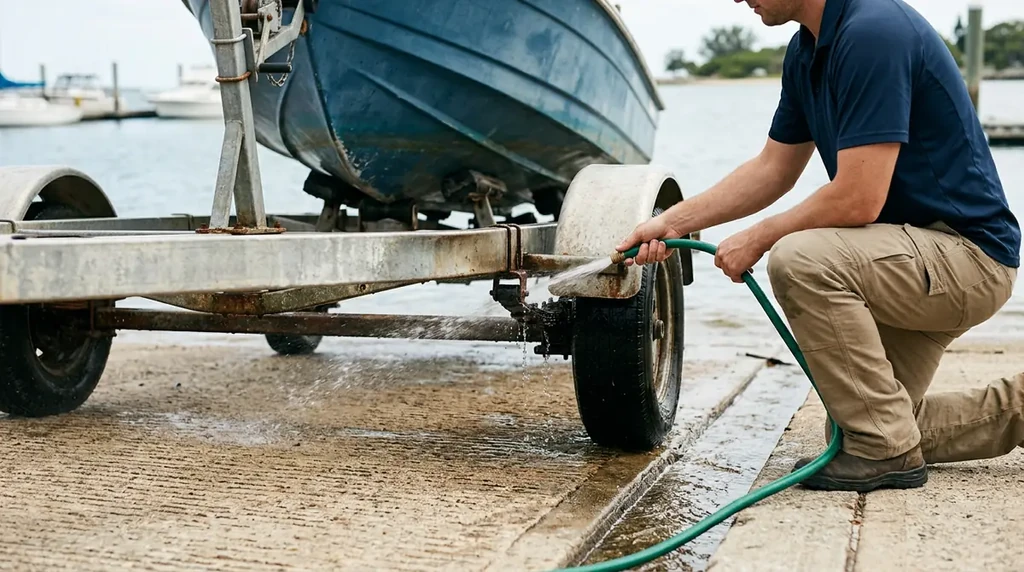
Before anything else, a full freshwater rinse is the foundation of post-season saltwater care. This means more than spraying down the exterior. Work methodically through the following areas:
- The undercarriage of the tow vehicle and trailer frame, including cross-members and weld points
- Wheel wells, brake assemblies, and lug nuts
- The trailer hitch, coupler, and safety chains
- Outboard motor cooling passages, if applicable, by running fresh water through the flushing port
- Boat hull, transom, and any through-hull fittings
- Bunk boards and roller assemblies on the trailer
Use a low-pressure setting on any areas with exposed wiring or sealed connectors. High pressure can force water into places where it then sits and continues to corrode.
Inspect and Treat Metal Surfaces
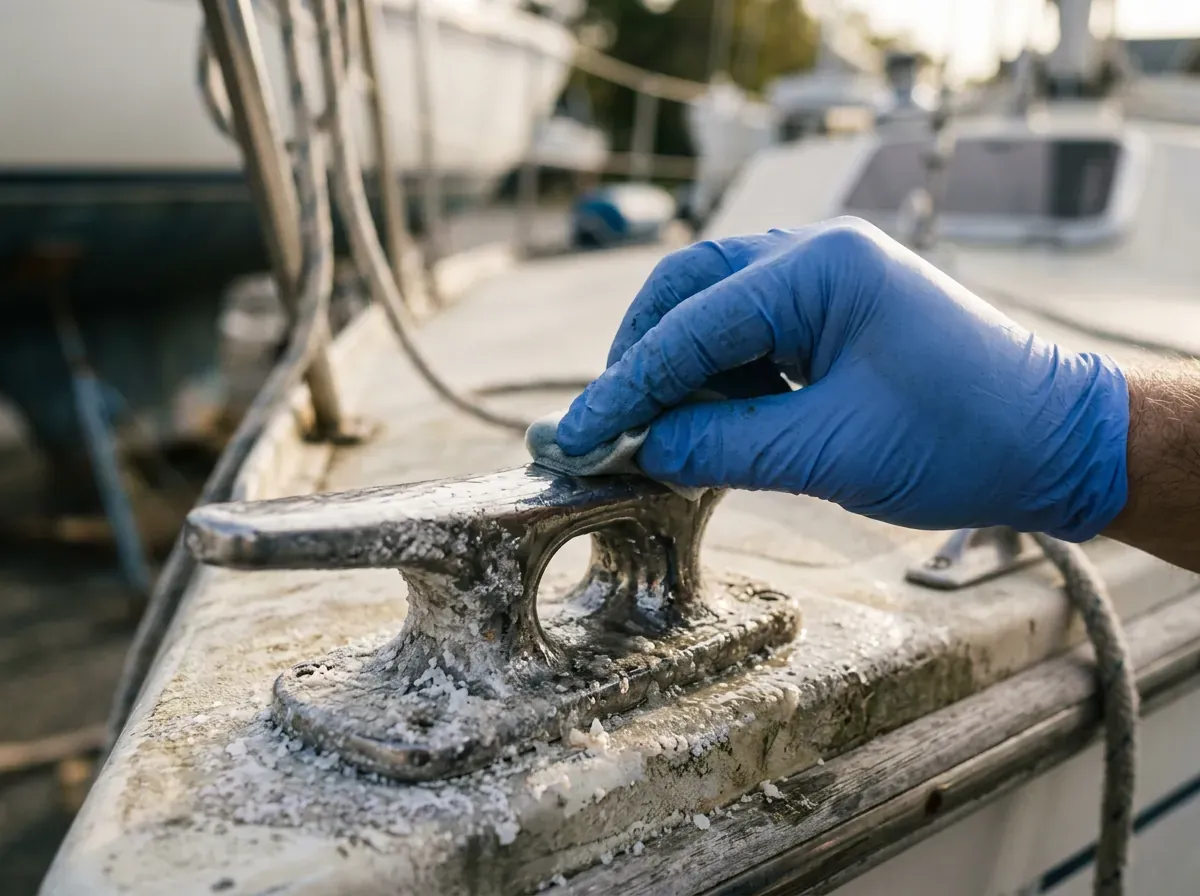
Once everything is dry, go back through with a corrosion inhibitor on metal-to-metal contact points. Hitch balls, trailer tongue hardware, and electrical plug connections are the most common failure points after saltwater exposure. Dielectric grease on electrical connectors prevents salt residue from bridging terminals. A light coat of corrosion-resistant spray on the trailer frame and hitch hardware gives you a barrier before the rig goes into storage.
Check the boat's gelcoat finish for any chips or scratches. Salt works into exposed fiberglass and begins breaking down the laminate from the inside. A small chip left untreated through an offseason can return as a much larger repair in the spring. Touching up chips with matching gelcoat and buffing the hull before storage is one of the higher-return steps in the whole process.
RV-Specific Maintenance After Coastal Trips
If you towed your RV to a coastal destination or parked it near the water for an extended stay, the RV itself needs attention beyond the tow vehicle and boat. Salt air alone, even without direct contact with saltwater, can affect exterior seals, roof vents, and slide-out mechanisms over time.
Work through these RV maintenance tips before putting the unit into offseason storage:
- Inspect all exterior seals around windows, doors, and the roof edge. Reseal any areas showing cracking or separation before storage.
- Lubricate slide-out rails and any exterior hinges or latches with a product rated for marine or coastal environments.
- Check the roof for standing water or soft spots, which can indicate delamination beginning underneath.
- Clean and condition any exterior vinyl graphics or decals, which become brittle with repeated salt air exposure.
- Flush and inspect the fresh water system if the RV was connected to a marina water supply, since mineral content in coastal water sources varies widely.
For a broader look at what to handle before your rig goes into storage, the RV storage guide covers the full winterization checklist in detail, including battery maintenance and LP system prep.
The Boat Trailer Deserves Its Own Inspection
Boat trailers are often the most neglected part of post-season care, partly because they spend the most time submerged in launch ramps and partly because corrosion on a trailer is easy to overlook until a bearing seizes or a weld fails. After a saltwater season, pull the bearing caps and inspect the grease. Saltwater intrusion into wheel bearings is one of the leading causes of trailer failure on the highway. Repack or replace bearings that show any discoloration or gritty texture.
Check the trailer lights and wiring harness. Submersion at boat ramps pushes water into light housings and connector pins, and salt accelerates the corrosion that follows. Replacing corroded bulb sockets before storage is far less involved than diagnosing an intermittent short on the road next season. The boat storage guide has additional detail on preparing the trailer and hull for extended storage periods.
Choosing the Right Storage After Saltwater Season
After putting in the work on post-season care, where you store the rig matters. Covered storage keeps UV exposure and rain off surfaces you just cleaned and treated, which extends the life of the gelcoat, exterior seals, and any corrosion inhibitors you applied. Covered storage options at a dedicated facility give your boat and RV a consistent environment through the offseason rather than leaving them exposed to whatever the weather brings.
If you are in the Gulf Coast region, the Florida locations are particularly well-suited for owners coming off a saltwater season. The covered boat storage in Fort Myers is a practical option for Southwest Florida boaters who want their vessel protected through the summer months. For a full list of locations across Florida, Texas, Colorado, Arizona, and Nevada, the storage locations directory is the place to start. Use the unit size guide to confirm the right space for your rig before you reserve.
Timing Is the Variable Most People Get Wrong
The most common mistake in post-season saltwater care is not skipping a step. It is waiting too long to start. Salt that sits on metal, fiberglass, and rubber seals for even a few weeks begins a corrosion cycle that is harder to reverse than it would have been to prevent. Running through the full checklist within a day or two of returning from a coastal trip, before the rig goes into storage, is what keeps the investment in good shape for the next season. The time spent now is a fraction of what a corroded trailer frame, failed outboard, or delaminated hull costs to address later.